
Mindnosis
Redesigning the mental health
assessment experience
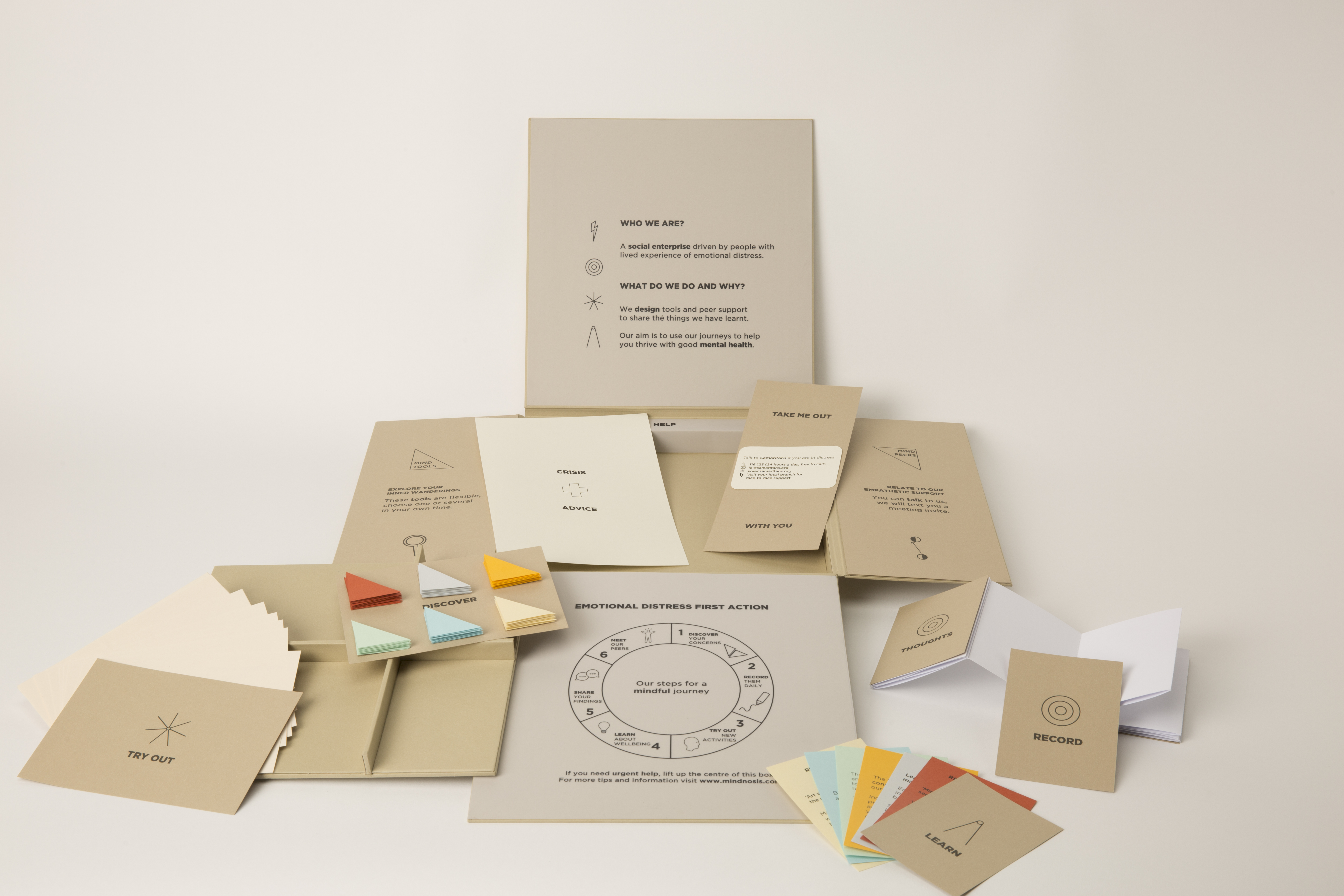
Mindnosis is the result of a nine-month co-design journey with people with lived experience of emotional distress. It started in India with cultural research through mapping, workshops, and prototyping, to a self-assessment kit delivered by post.
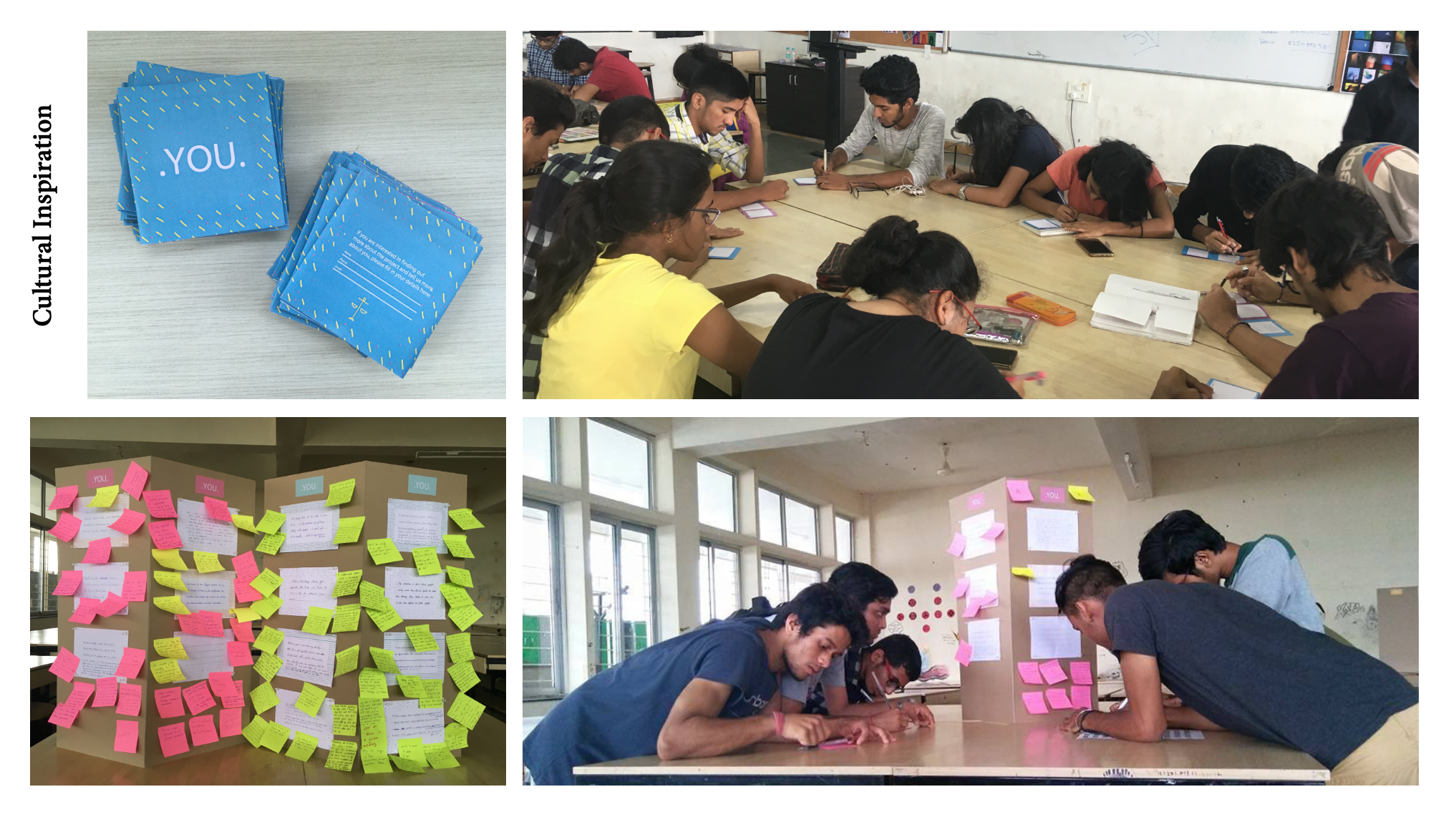
Cultural inspiration
One month in India researching and testing wellbeing activities. I carried out a few experiments, such as inviting students to write a problem anonymously and collectively read them out, to show how much each other had in common and inviting them to be more open with each other.
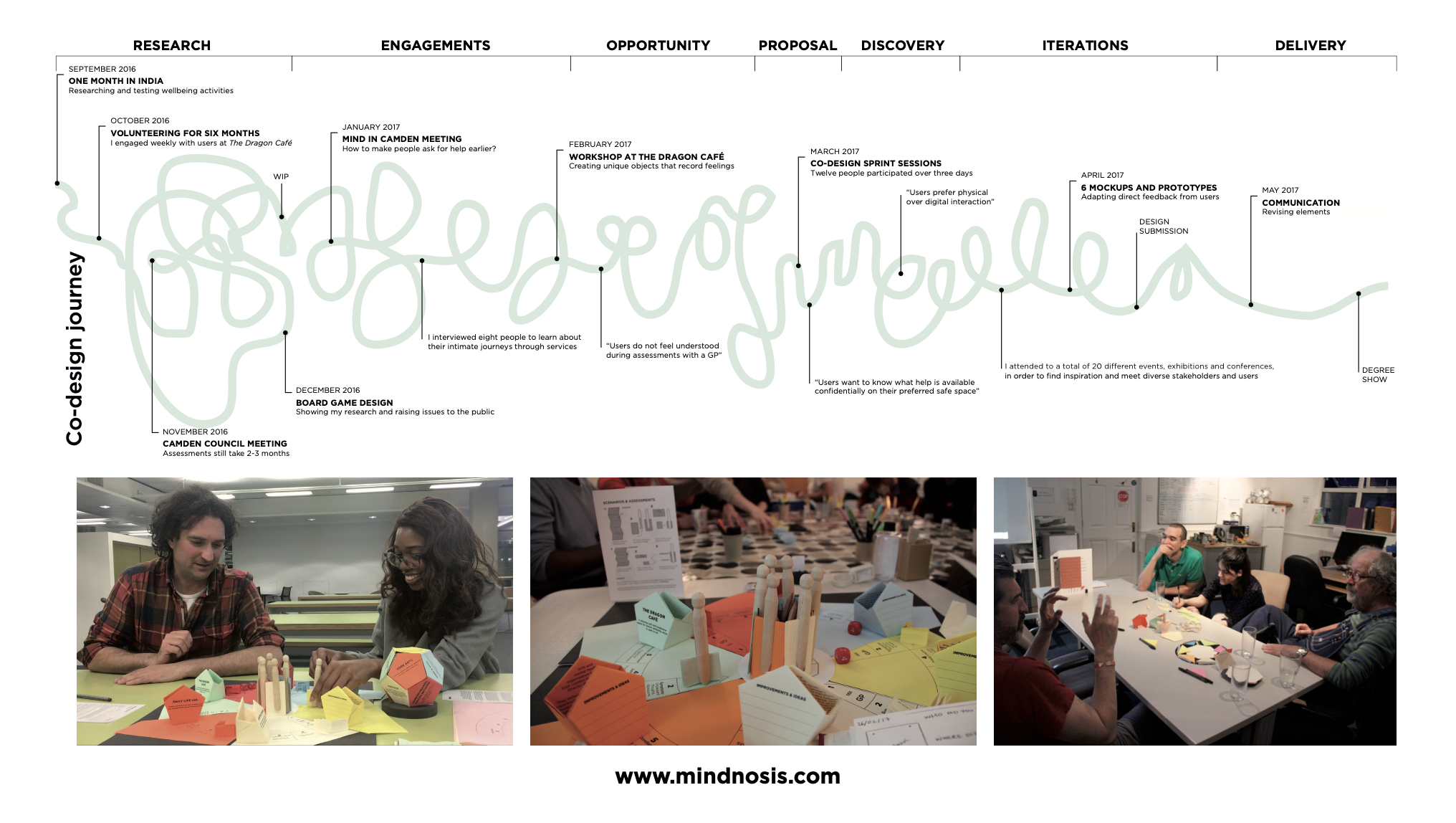
The co-design journey
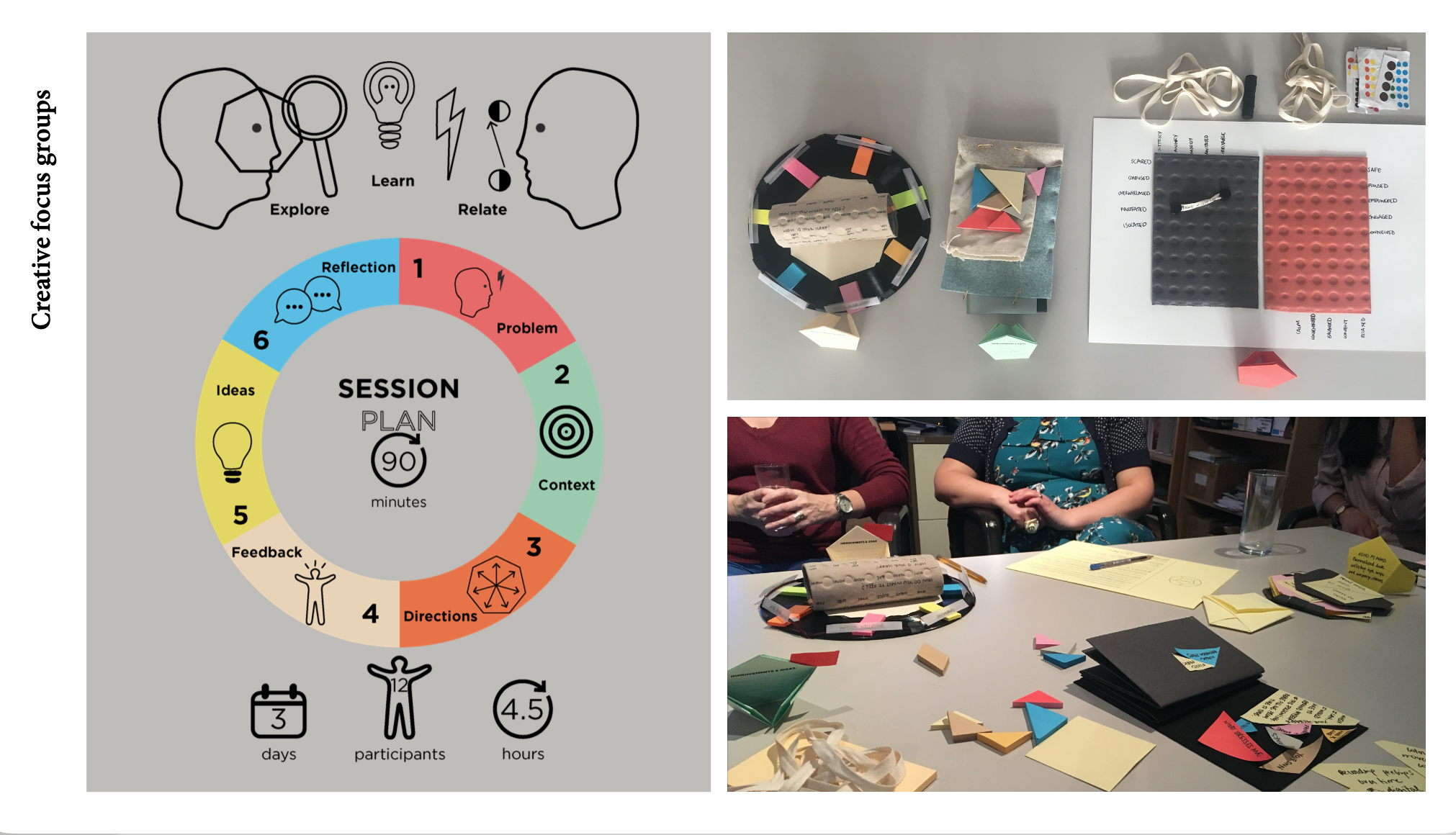
Nine months from research to delivery: volunteering weekly at The Dragon Café, meetings with Mind in Camden and Camden Council, co-design sprint sessions with twelve participants, six mockups and prototypes, and twenty events, exhibitions and conferences.
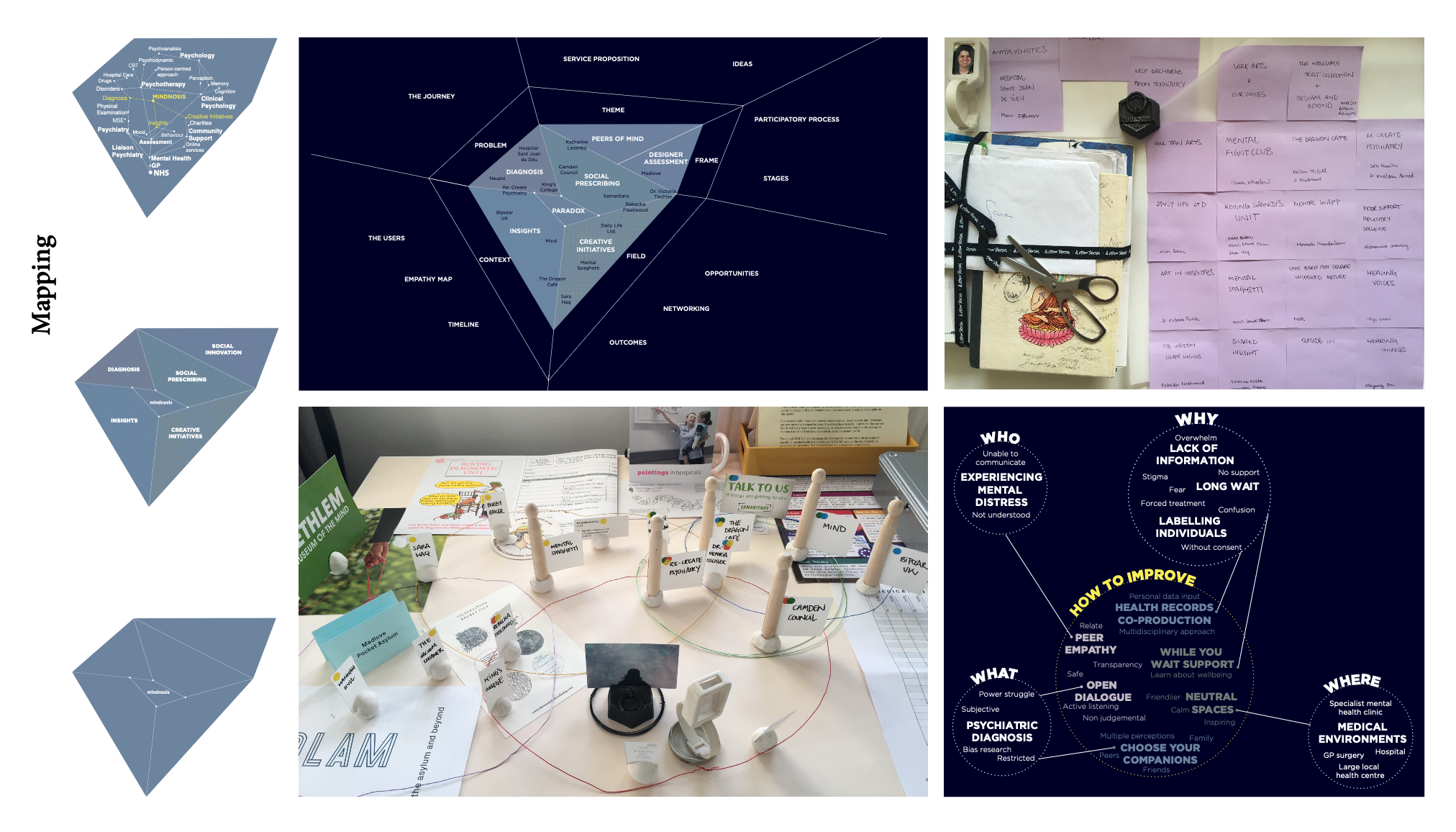
Mapping the system
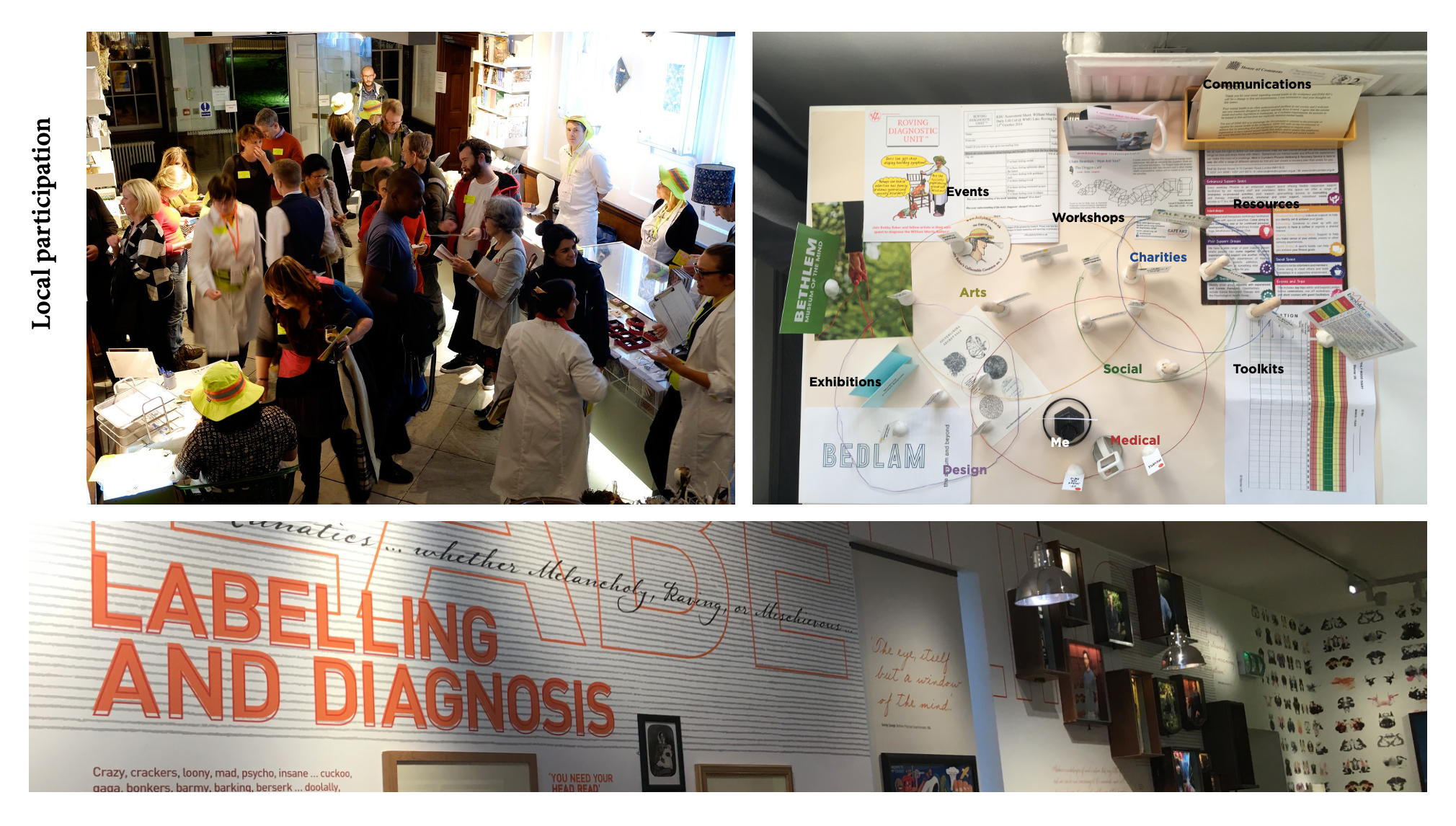
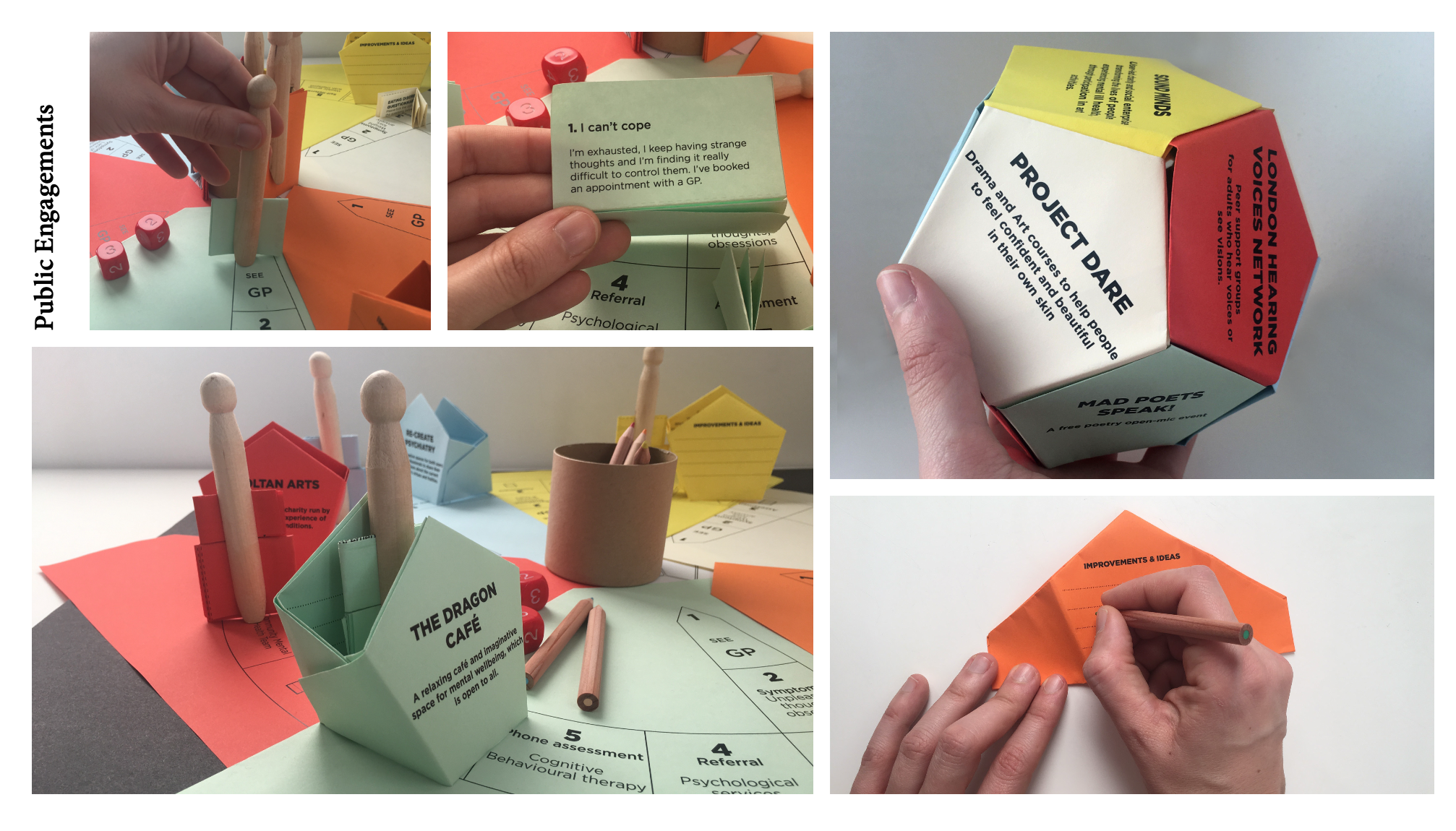
Charting the mental health landscape across NHS pathways, psychiatry, community support and creative initiatives. I joined local events from Bedlam at the Museum of the Mind to council meetings to keep the work in dialogue with its community. I created a board game that let the public physically experience the wait and bureaucracy of accessing services. The objective was to find where Mindnosis could sit: between insights, diagnosis and social prescribing.
Workshops and user journeys
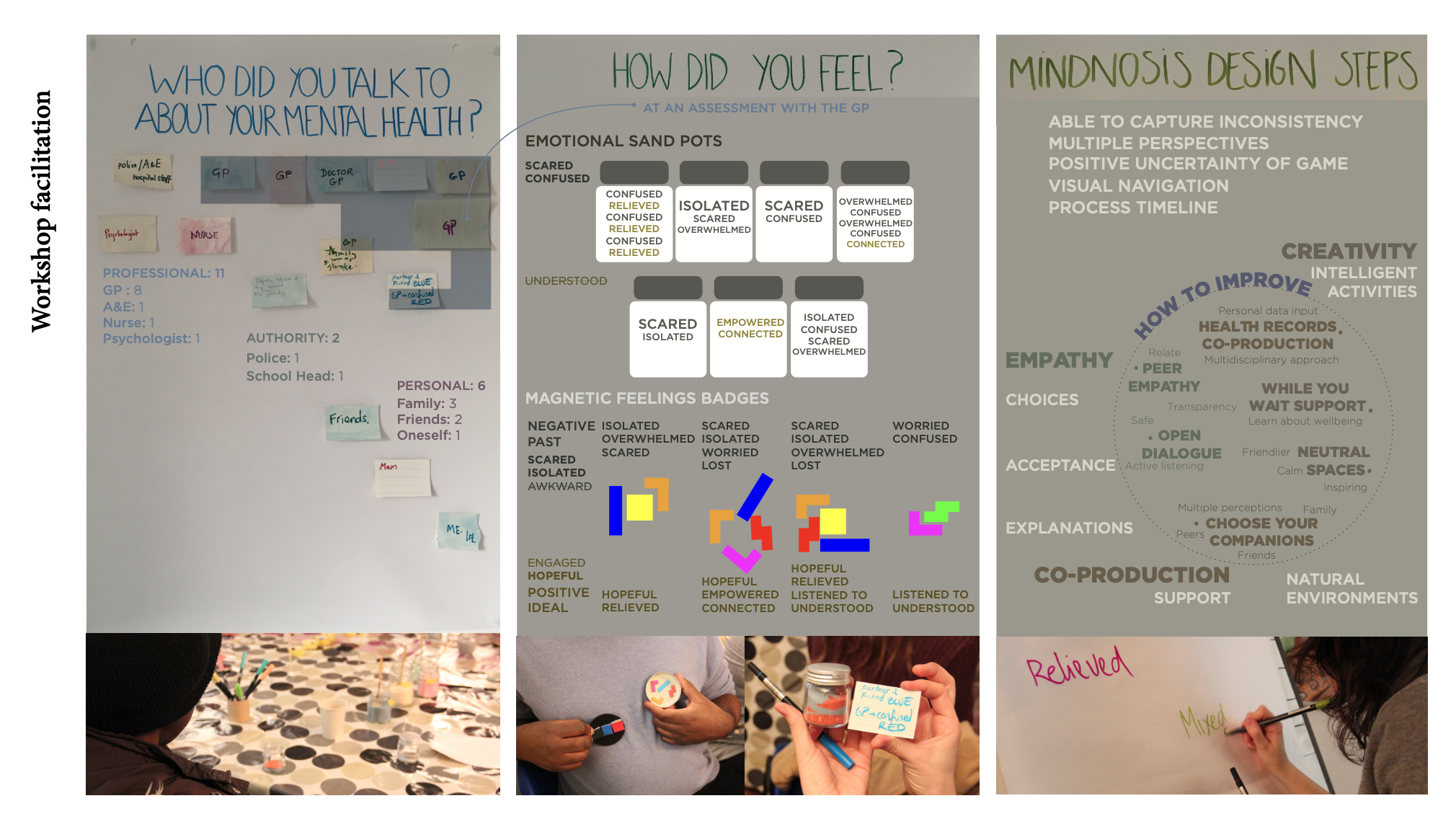
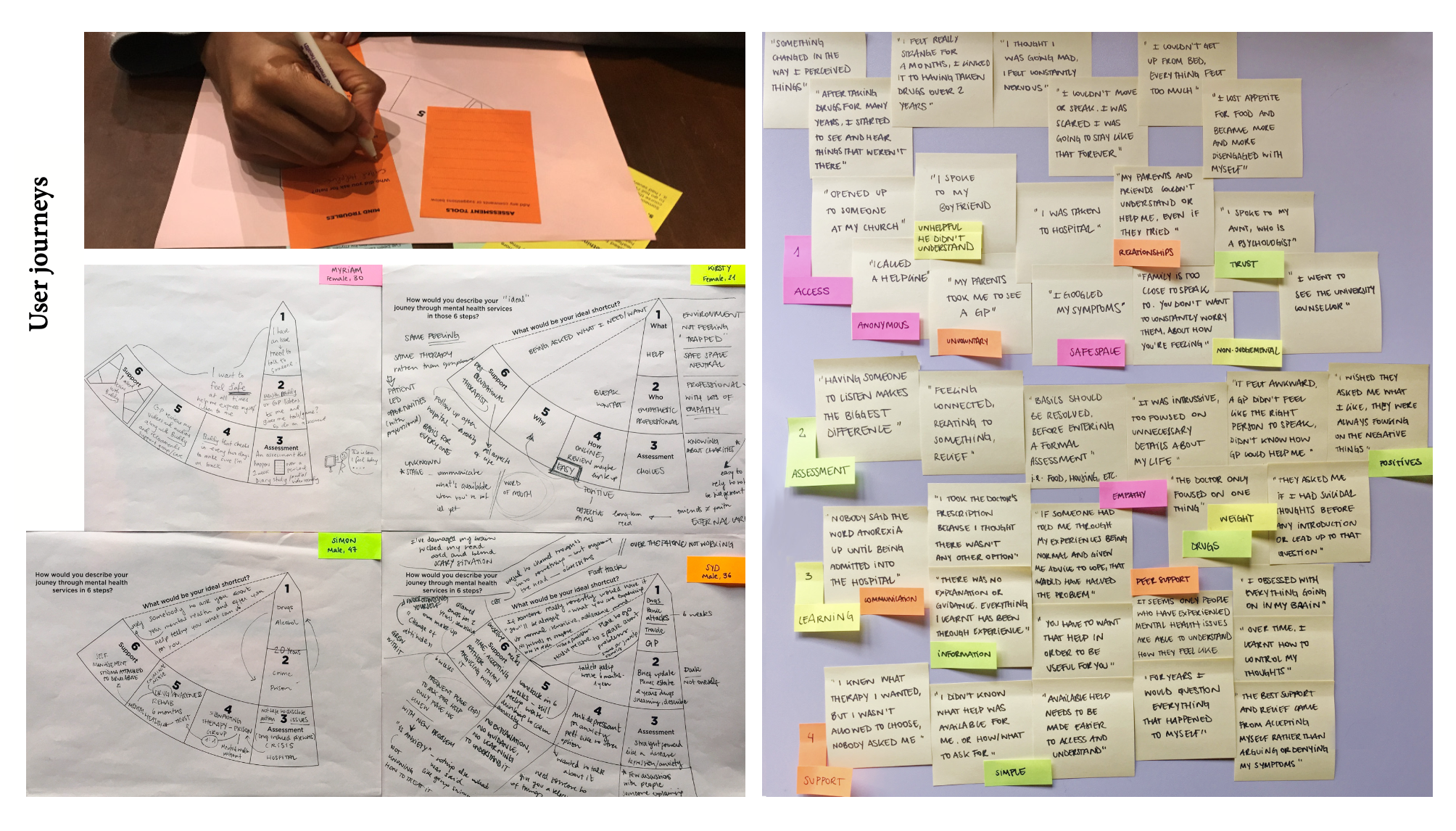
Workshops at The Dragon Café made difficult conversations tangible. I used emotional sand pots and magnetic feeling badges to record how people felt during assessments. Interviews and journey mapping surfaced the insight that carried the project: having someone to listen makes the biggest difference.
Engaging the public and prototyping
I ran 3 design sprints with a diverse group of users to explore Mindnosis' problem and reflections. The result were six mockups and prototypes, adapted from direct user feedback and tested until the kit found its final form.
Mind tools
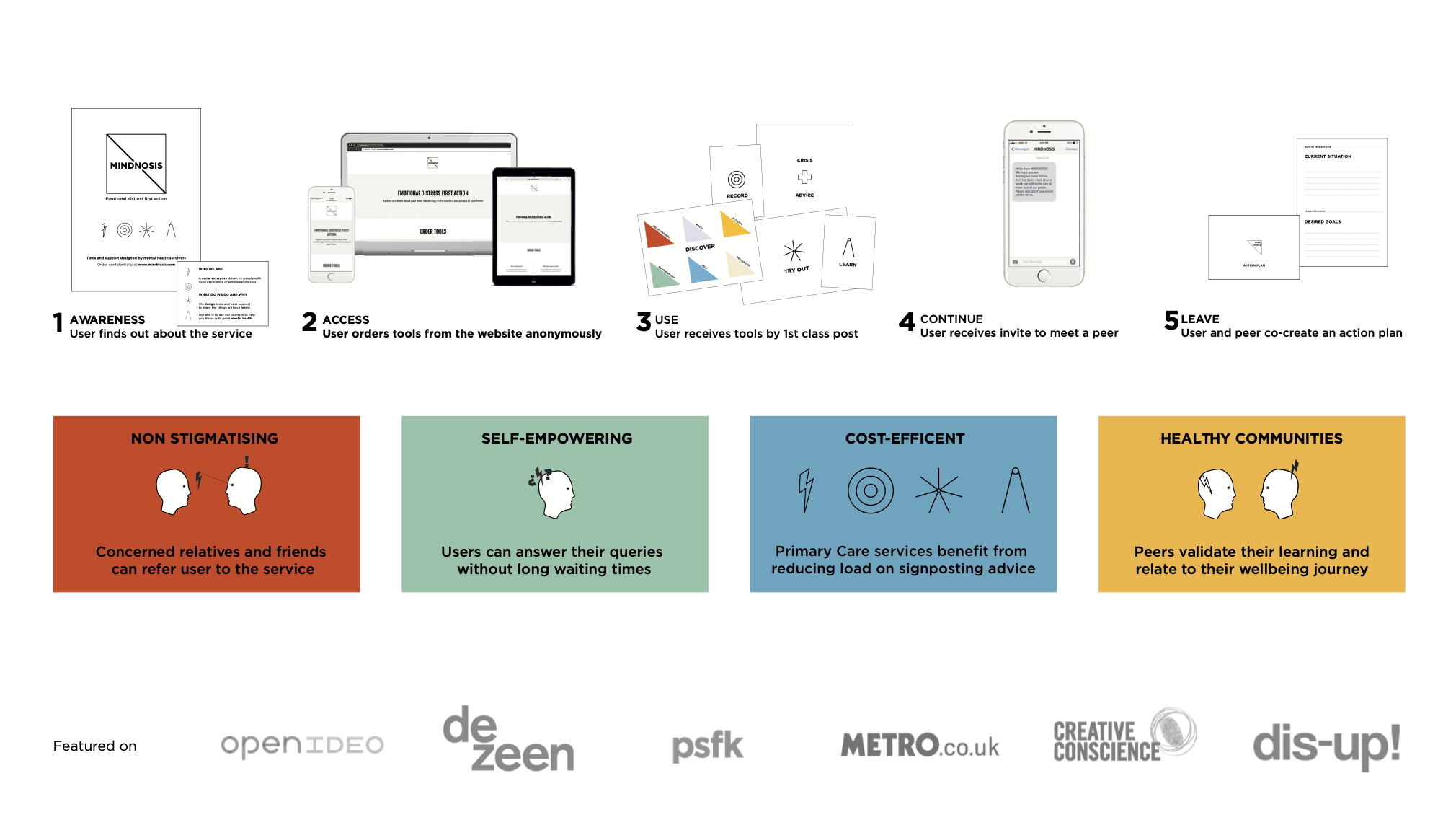
A kit ordered confidentially and delivered by post, containing a series of suggested activities and steps to explore inner wondering safely. Crisis support and local signposting is also part of the kit.
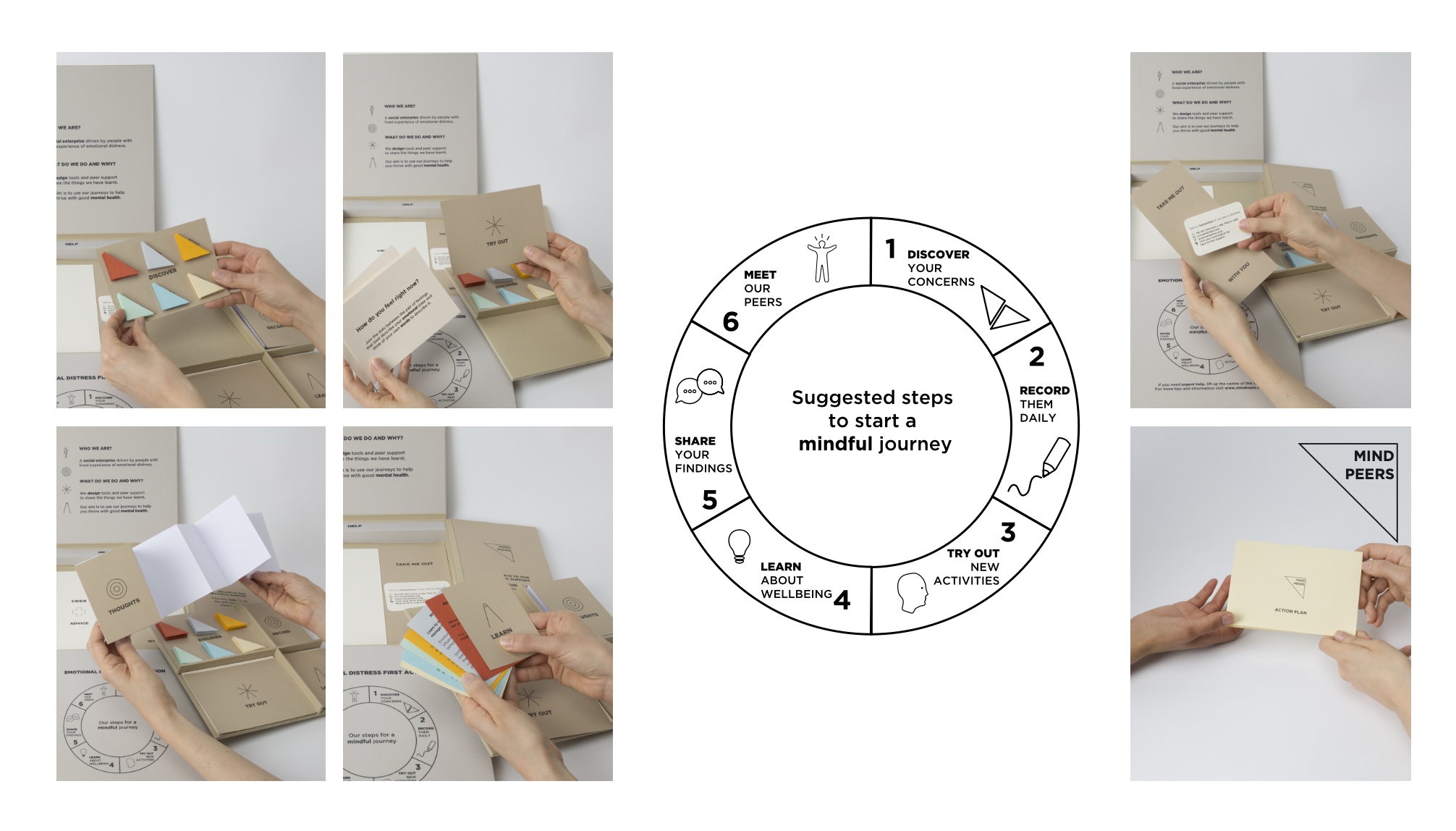
Mind peers
After a couple of weeks the user receives an invitation to meet with a local peer to discuss their experience with the kit and co-create an action plan. The social enterprise loop closes with non-stigmatising, self-empowering, cost-efficient, and building healthier communities.
Want the tools, or a workshop built on them? Get in touch.